
Explainer: Who is Mojtaba Khamenei and how did he succeed his father?
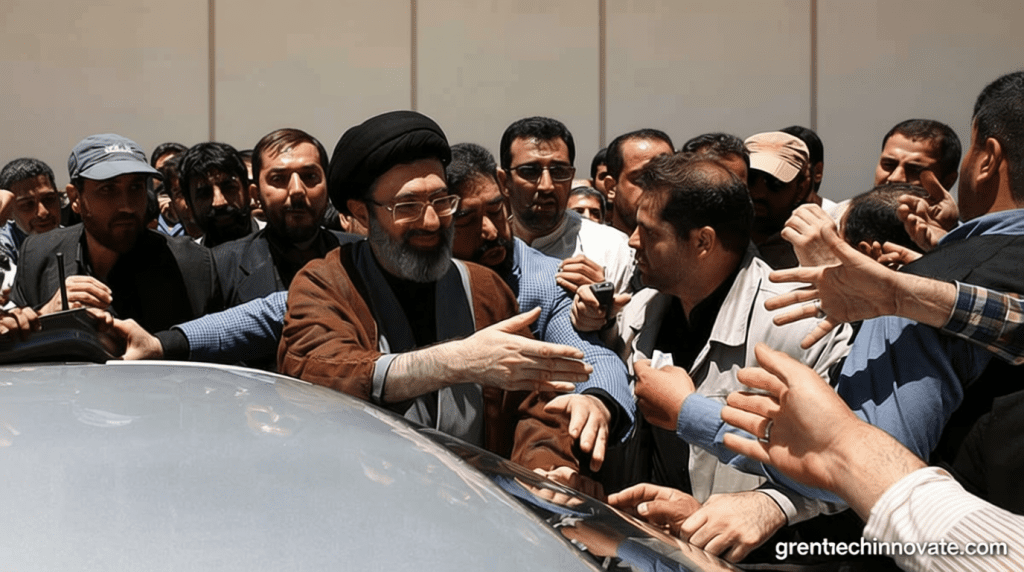
Explainer: Who is Mojtaba Khamenei and how did he succeed his father?
Succession Amid Political Shift
The Iranian Assembly of Experts recently confirmed Mojtaba Khamenei’s appointment as the new Supreme Leader, marking his ascension to power following the death of his 86-year-old father, Ali Khamenei, in an Israeli airstrike. The attack, which targeted the supreme leader’s offices, also claimed the life of Mojtaba’s mother, Zahra Haddad Adel, a woman from a family deeply rooted in theocratic governance. This transition occurs against the backdrop of heightened tensions in the region, with Mojtaba stepping into a role traditionally held by his father since 1989.
Early Life and Education
Mojtaba Khamenei was born in 1969 in Mashhad, a city with historical significance for Shia Islam. His path to leadership began in the mid-1980s, during the final years of the Iran–Iraq War, when he was a teenager. At seventeen, he was deployed to the frontlines, serving in the Habib ibn Mazaher Battalion of the 27th Mohammad Rasulullah Division—a unit renowned for its role in recruiting ideologically driven young soldiers. This experience forged connections with key figures in the Islamic Revolutionary Guard Corps (IRGC), which would later bolster his political standing.
After his military service, Mojtaba pursued clerical studies at Qom seminary, following his father’s footsteps. He trained under influential scholars, including Mohammad-Taghi Mesbah-Yazdi and Mahmoud Hashemi Shahroudi. His academic focus laid the groundwork for a career intertwined with religious and state institutions, positioning him as a figure with both spiritual authority and strategic influence.
Political Influence and Wealth
Analysts note that Mojtaba’s role extends beyond his familial ties, as he has cultivated a network of power within Iran’s security apparatus. Unlike his brothers, who primarily occupied cultural or administrative posts linked to their father’s office, Mojtaba has emerged as a central figure in shaping the country’s political landscape. His financial footprint has also sparked scrutiny, with some Western media dubbing him a “billionaire” and highlighting his extensive property holdings in cities like London and Vienna. However, the exact control over these assets remains unclear due to the opaque nature of Iran’s economic structures.
“Mojtaba Khamenei’s influence over economic networks is not the result of private enterprise but a consequence of his political position and ties to state institutions,” one analyst remarked.
His political leanings are often described as a “black box,” with limited public commentary on major policies. While some view him as a hardliner aligned with the security sector, others argue his lack of an executive record makes it difficult to assess his true ideological stance. Despite this ambiguity, his early wartime participation has been seen as a symbol of loyalty to the regime’s core principles, a legacy that continues to shape his role in Iranian politics.
