
Iran’s strikes on Gulf energy sites rattle markets and raise recession fears
Iran’s Strikes on Gulf Energy Sites Rattle Markets and Raise Recession Fears
As the US-Israeli military buildup escalated before the war that began a week ago, Iran consistently issued warnings of retaliation, predicting chaos across the region and global economic consequences. Now, with Iran’s relentless aerial assaults continuing, the effects on energy markets have grown increasingly severe, stoking concerns about a potential global downturn.
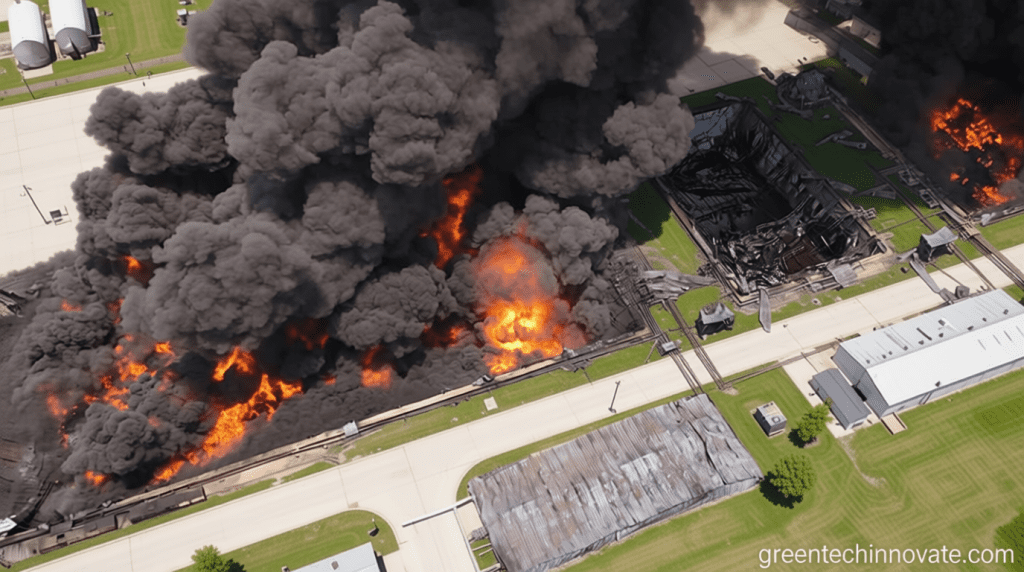
Following the war’s outbreak last Saturday, Tehran has broadened its offensive, targeting not only military assets but also critical energy infrastructure in the Gulf. On Thursday, the attacks extended to Azerbaijan, disrupting key operations and intensifying worries over supply chain stability. While Iran insists its actions are focused on US and Israeli interests, evidence suggests the strikes are also damaging the energy systems that power major economies and maintain global energy equilibrium.
One notable impact has been the disruption of the Strait of Hormuz, a vital maritime route where 20% of the world’s oil flows. Trade service Lloyd’s List reported that over 200 vessels were stranded due to Iranian actions. In Qatar, the country’s primary liquefied natural gas (LNG) facilities in Mesaieed and Ras Laffan Industrial City faced drone strikes, forcing the nation to halt its top LNG production. This move sent ripples through global energy trade, pushing prices upward.
Qatar’s LNG output contributes roughly 20% to worldwide supply and is essential for balancing demand in both Asian and European markets. Meanwhile, Saudi Arabia’s largest oil refinery was shut down after a fresh wave of Iranian strikes, and Iraqi oil output, as well as Israeli gas fields, also suffered. Dubai’s ports, among the largest globally, were reported to be affected, further complicating regional logistics.
Global Recession Risks and Strategic Implications
On Friday, the UK Foreign Office noted that although Iranian attacks have slowed in frequency compared to the war’s initial days, the range of targets has diversified, emphasizing economic and energy-sector vulnerabilities. In an interview with the Financial Times, Qatar’s Energy Minister Saad al-Kaabi warned that the conflict could destabilize global economies. “If this war persists for several weeks, GDP growth will suffer worldwide,” he stated. “Energy prices will rise, products will face shortages, and factories will struggle to meet demand,” he added.
“A full blockade of the Strait of Hormuz could trigger a global recession,” said Dr. Yousef Alshammari, president of the London College of Energy Economics. “As summer approaches, the risk of economic decline may intensify, and China—being the largest consumer of Iranian oil—could exert significant political pressure.”
Alshammari highlighted that while gas prices have surged by over 50%, especially in Europe, oil prices have risen less than anticipated. “This is partly due to weak global demand and the continued availability of oil supplies,” he explained.
Confusion Over Iran’s Strategic Moves
Former US ambassador to Azerbaijan, Matthew Bryza, questioned the logic behind Iran’s strikes. “The attacks on Azerbaijan and the recent actions in Turkey and Cyprus don’t align with a clear, rational military strategy,” he told Euronews. “Why would Iran target Nakhchivan, a region in Azerbaijan, when it clearly wants to avoid dragging the country into the conflict?”
“Even as Azerbaijan’s president offered support to Iran after the war began, Iran launched an attack shortly after. This sequence makes little sense,” Bryza remarked. “Azerbaijan’s leader, Ilham Aliyev, was the only world leader to visit an Iranian embassy for condolences following the assassination of Iran’s supreme leader and other high-ranking officials. Yet, just hours after his gesture, Iran struck Azerbaijan. That’s contradictory,” he added.
Bryza suggested Iran’s actions might be aimed at sowing instability in societies and economies to pressure US President Donald Trump. He noted that ongoing supply chain issues and rising oil prices could harm Republican prospects in the coming months.
