
Oil surges and stock futures sink as war in Iran threatens crude supply
Oil surges and stock futures sink as war in Iran threatens crude supply
Monday saw a sharp rise in oil futures following U.S. and Israeli strikes on Iran over the weekend, intensifying tensions across the Middle East. U.S. crude prices climbed 7.5%, while Brent crude, the global reference benchmark, surged 6.2% to trade near $77 per barrel, briefly crossing $82 earlier in the session. The market had been anticipating the conflict, which already had the potential to disrupt oil flows.
Meanwhile, stock futures dipped. The S&P 500, Nasdaq, and Dow all declined more than 1% in pre-market trading. However, shares of Exxon and Chevron rose, as elevated oil prices typically benefit energy firms. Defense stocks, including Northrop Grumman and Lockheed Martin, also gained traction amid fears of prolonged regional instability.
Geopolitical disruptions and price projections
Traders are wagering that the current oil market disruption, caused by the strikes, will be temporary. Yet, uncertainty persists regarding the war’s duration and scale. President Donald Trump hinted the conflict could last weeks, raising concerns about long-term effects on energy markets.
“Elevated global benchmark prices (for oil)… are expected to be sustained until the Strait is passable,” wrote Jorge Leon, head of geopolitical analysis at Rystad Energy, in a Saturday note.
Analysts warn that if oil flows face major interruptions, prices could climb beyond $100 a barrel. This would not only raise gasoline costs but also burden consumers with higher expenses linked to regime change in Iran. The potential for such a scenario has sparked worry among investors.
A vital shipping route at risk
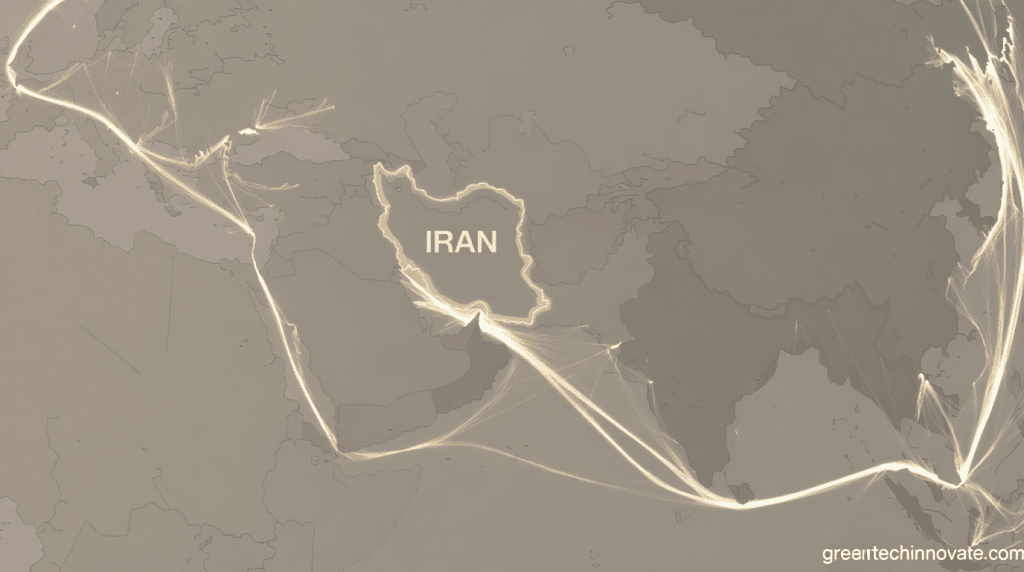
The Strait of Hormuz, a narrow waterway near Iran’s southern coast, serves as a critical conduit for crude oil from nations like Saudi Arabia and Kuwait. Iran controls the northern section of the strait, which sees approximately 20 million barrels—about 20% of global daily production—passing through each day. The U.S. Energy Information Administration labels it a “critical oil chokepoint.”
Iran previously threatened to close the strait during clashes with Western powers. In a 2019 conflict, Goldman Sachs forecasted oil prices could exceed $100 if the strait faced an extended disruption. Although the strait remains open, vessels are navigating it cautiously due to safety concerns after several tankers were targeted over the weekend.
Global ripple effects and supply chain risks
If the strait were blocked, Asian economies like China and India would face severe challenges securing oil. Their efforts to diversify sources could drive global prices higher. Even a limited disruption, such as reduced Iranian exports, would have widespread consequences, as oil is a globally traded commodity.
“Since oil is a global, fungible commodity, a disruption anywhere affects prices everywhere,” noted Clayton Seigle, a senior fellow at the Center for Strategic and International Relations, in a recent analysis.
Further risks emerge if Saudi Arabia’s oil infrastructure, such as the Abqaiq facility, is damaged. McNally of Rapidan Energy Group emphasized that the 2019 attack on Abqaiq showcased the vulnerability of specialized equipment, which cannot be easily replaced. On Monday, Saudi Arabia reportedly shut some units as a precautionary measure.
