
Climate Change Solutions in 2025: What Works Now
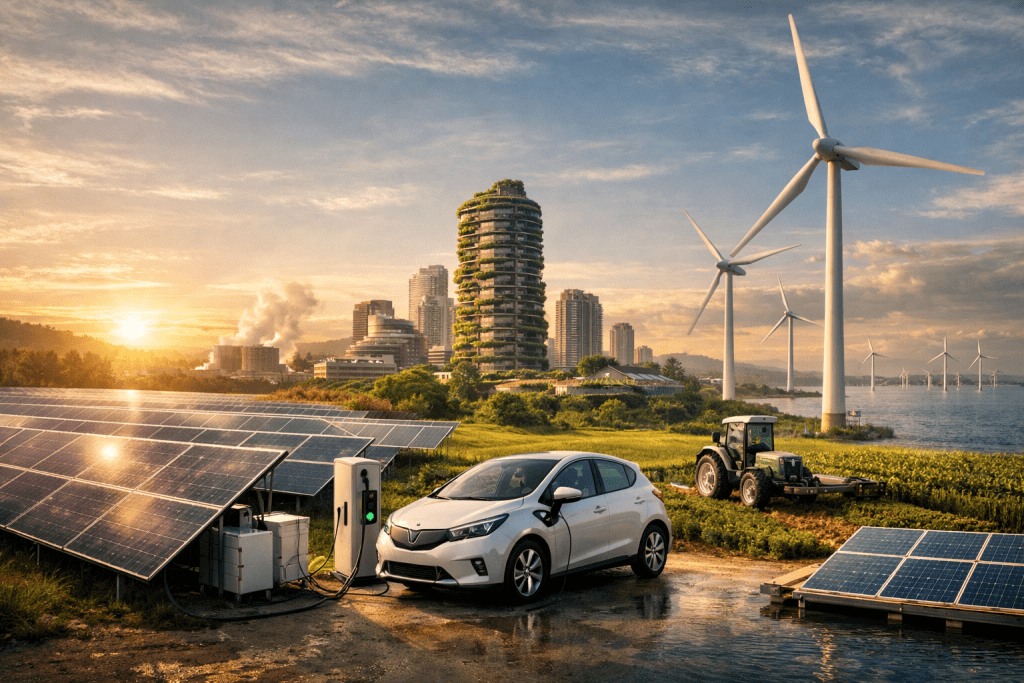
The world no longer asks whether climate change is real; the focus has shifted to what delivers measurable impact today. Climate change solutions in 2025 are defined by scalability, cost efficiency, and verified emissions reductions. Governments, corporations, and local communities are prioritizing technologies and policies that cut carbon quickly while maintaining economic stability. The most effective strategies combine energy transition, industrial innovation, ecosystem restoration, and systemic behavior change.
Accelerated Renewable Energy Deployment
The backbone of Climate change solutions in 2025 remains rapid renewable energy expansion. Solar and wind are now the cheapest forms of new electricity generation in most regions, making them economically competitive without heavy subsidies. Utility-scale battery storage has matured, reducing intermittency concerns and stabilizing national grids. Countries investing in grid modernization are seeing faster integration and lower curtailment rates.
Offshore wind projects have expanded in coastal economies, delivering large-scale clean electricity with high capacity factors. At the same time, distributed rooftop solar adoption continues to rise due to declining installation costs and improved financing models. Microgrids are gaining relevance in developing regions, providing resilience against extreme weather. Electrification of rural communities is increasingly tied to decentralized renewable infrastructure.
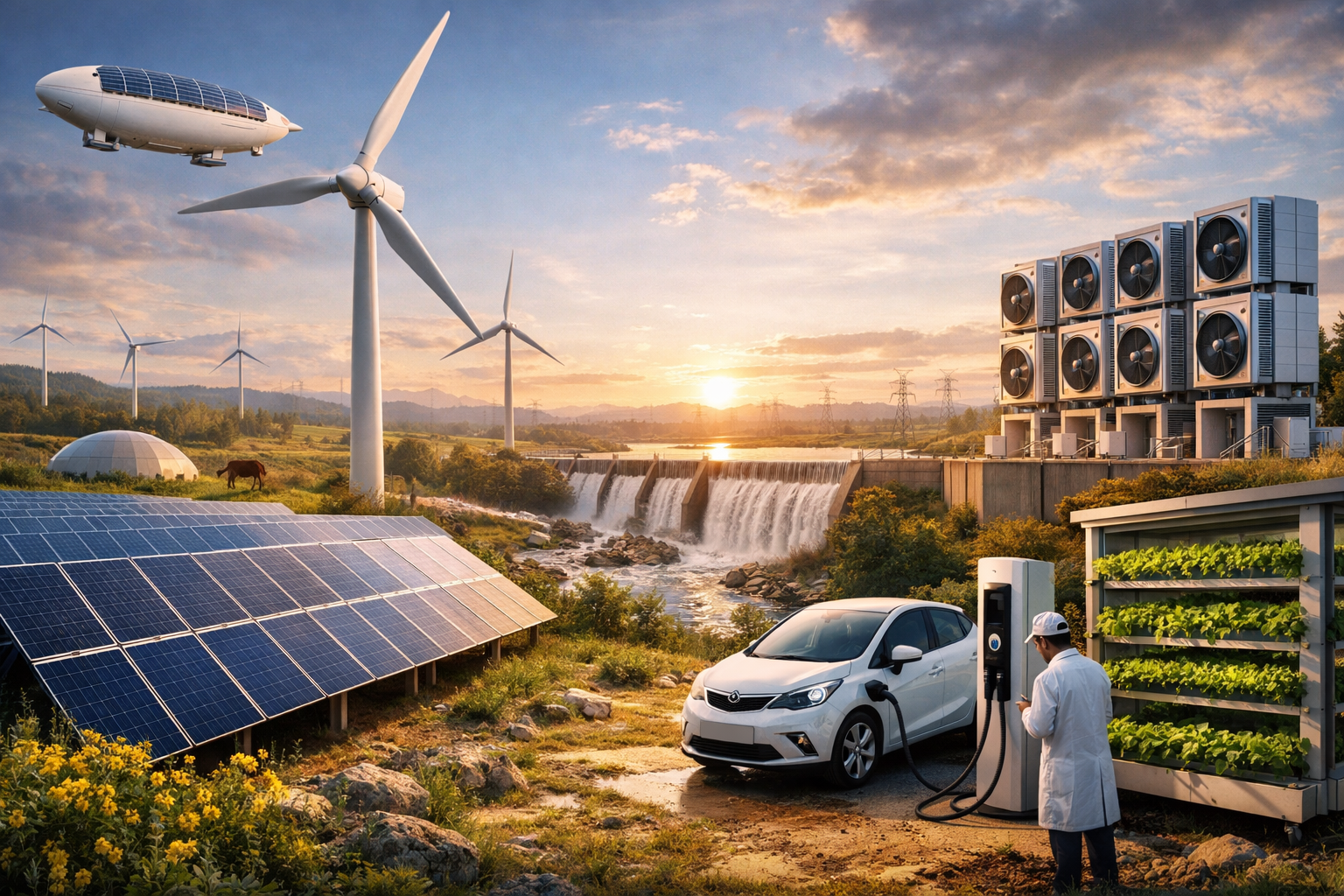
Hydropower and geothermal energy also contribute to the diversified energy mix. While large dams face environmental constraints, modernization of existing hydro facilities increases efficiency without new ecological disruption. Enhanced geothermal systems are emerging as a reliable baseload solution in tectonically stable regions. The integration of multiple renewable sources reduces dependence on fossil fuels while strengthening energy security.
Electrification of Transport and Industry
Transport electrification represents one of the most visible Climate change solutions in 2025. Electric vehicles (EVs) have reached cost parity with internal combustion cars in several markets, accelerating adoption. Charging infrastructure has expanded significantly, reducing range anxiety and enabling long-distance travel. Fleet electrification in logistics and public transport delivers high-impact emissions reductions.
Heavy industry, historically difficult to decarbonize, is undergoing transformation. Green hydrogen is being deployed in steelmaking and ammonia production, replacing coal-based processes. Electrified heat systems and high-efficiency electric furnaces reduce reliance on natural gas in manufacturing. Industrial carbon capture technologies are operational in cement and chemical plants where emissions are process-related.
Shipping and aviation remain challenging sectors, yet sustainable fuels are gaining traction. Advanced biofuels and synthetic fuels derived from green hydrogen are scaling slowly but steadily. Regulatory frameworks in major economies now require incremental emissions reductions in aviation fuel blends. These shifts signal structural change rather than pilot experimentation.
Carbon Removal and Nature-Based Solutions
Beyond emission reductions, carbon removal has become central to Climate change solutions in 2025. Direct Air Capture (DAC) facilities are operational at commercial scale, though costs remain high. Investment in research and infrastructure aims to lower per-ton capture expenses over the next decade. Carbon removal is increasingly integrated into corporate net-zero commitments.
Nature-based solutions deliver immediate co-benefits. Large-scale reforestation and afforestation projects restore degraded landscapes while enhancing biodiversity. Regenerative agriculture improves soil carbon storage and increases resilience to drought. Wetland restoration protects coastal communities and acts as a natural carbon sink.
Transparency and verification have improved through satellite monitoring and blockchain-based carbon registries. This reduces the risk of greenwashing and ensures accountability in voluntary carbon markets. High-integrity offsets are becoming stricter, prioritizing measurable and permanent carbon sequestration. These developments strengthen trust in carbon removal as a complement to emissions reduction.
Policy, Finance, and Market Mechanisms
Policy alignment remains essential for scaling Climate change solutions in 2025. Carbon pricing mechanisms, including emissions trading systems and carbon taxes, now cover a growing share of global emissions. Clear price signals encourage innovation and discourage high-emission practices. Regulatory certainty attracts long-term private investment.
Green finance has expanded dramatically. Sustainable bonds and climate-focused investment funds channel capital into renewable energy, clean infrastructure, and adaptation projects. Disclosure standards require corporations to report climate risks and transition strategies. Financial institutions increasingly integrate climate risk into lending and underwriting decisions.
Public-private partnerships accelerate infrastructure development. Governments de-risk early-stage technologies, allowing private firms to scale solutions faster. Subsidies are shifting from fossil fuel support to clean energy incentives. The redirection of capital flows marks a structural economic transition rather than incremental reform.
Climate Adaptation and Resilience Planning
Mitigation alone is insufficient; adaptation is equally critical in Climate change solutions in 2025. Extreme weather events are increasing in frequency and intensity, requiring infrastructure upgrades. Flood barriers, resilient urban drainage systems, and wildfire management programs reduce economic losses. Cities are redesigning zoning regulations to avoid high-risk areas.
Climate-resilient agriculture is gaining importance in food security strategies. Drought-resistant crop varieties and precision irrigation technologies minimize water usage. Digital climate forecasting tools enable farmers to plan planting cycles more accurately. Supply chains are adapting to reduce vulnerability to climate shocks.
Insurance markets are evolving to reflect climate risk. Premiums are increasingly tied to resilience investments and mitigation measures. Governments are creating climate risk funds to protect vulnerable populations. Adaptation is now recognized as a cost-saving investment rather than reactive disaster spending.
Digital Innovation and Data-Driven Climate Action
Digital technology enhances the effectiveness of Climate change solutions in 2025. Artificial intelligence optimizes energy consumption in smart grids and buildings. Real-time emissions monitoring allows companies to identify inefficiencies quickly. Predictive analytics support early warning systems for extreme weather events.
Blockchain applications improve transparency in carbon markets and renewable energy certificates. Internet of Things (IoT) sensors monitor soil health, air quality, and water systems. Data-driven decision-making strengthens accountability across sectors. The integration of digital infrastructure with sustainability goals increases precision and reduces waste.
Corporate sustainability platforms centralize emissions tracking across global operations. Standardized reporting frameworks enable comparability across industries. Investors rely on data integrity to allocate capital effectively. Digital tools transform climate action from broad commitments into measurable performance metrics.
Conclusion
Climate change solutions in 2025 are defined by rapid renewable expansion, industrial electrification, credible carbon removal, supportive policy frameworks, resilience planning, and digital optimization. What works now is practical, scalable, and economically integrated into mainstream systems. The transition is no longer theoretical; it is operational across energy, transport, finance, and land management. Continued alignment between technology, policy, and capital will determine the pace of global decarbonization.
FAQ
Q: What are the most effective Climate change solutions in 2025? A: The most effective solutions include large-scale renewable energy deployment, transport electrification, industrial decarbonization, verified carbon removal, and strong carbon pricing policies.
Q: Is carbon capture a realistic climate solution today? A: Carbon capture is operational in specific industries and direct air capture facilities, but it complements emissions reduction rather than replacing it.
Q: How important is renewable energy in current climate strategies? A: Renewable energy is central, as solar, wind, and storage systems now provide cost-competitive and scalable alternatives to fossil fuels.
Q: Do nature-based solutions significantly reduce emissions? A: Yes, reforestation, regenerative agriculture, and wetland restoration sequester carbon while improving biodiversity and ecosystem resilience.
Q: Why is adaptation included in Climate change solutions in 2025? A: Adaptation reduces the economic and social damage from climate impacts, making it essential alongside mitigation efforts.
