
A Key Congressional Race in California Will Test Progressives’ Appeal
A key congressional race in California – California’s Central Valley has long been a battleground for political influence, but the recent Democratic primary there has taken on new significance. While it initially appeared to be a typical contest between the party’s progressive faction and its moderate leadership, the outcome surprised many. Populist candidate Randy Villegas emerged victorious, challenging the traditional power dynamics within the Democratic establishment. This victory is not just a local triumph; it represents a broader test of whether progressive messaging can resonate with voters in traditionally Republican-leaning districts.
The race against Republican Representative David Valadao has become a focal point for Democrats aiming to reclaim control of the U.S. House majority. Valadao, a key target for the party, has been a prominent figure in the House for years, often positioned as a potential ally to the Trump administration. Yet, Villegas’ win suggests that voters may be prioritizing anti-establishment rhetoric over party loyalty. This shift could signal a changing tide in the national political landscape, where progressive candidates are increasingly challenging their more centrist counterparts.
A Populist Victory with National Implications
Villegas’ success in the primary has sparked debate about the effectiveness of populist strategies in swing districts. Ravi Mangla, a spokesperson for the Working Families Party—a progressive group backing Villegas—argued that the message of political reform transcends geographic boundaries. “A populist message isn’t just for blue districts or certain parts of the country,” Mangla stated. “It can win anywhere people feel like politics is not working for them.” His comments reflect a growing belief that voters across the political spectrum are drawn to candidates who challenge the status quo.
“More than ever, voters across the political spectrum want candidates who are willing to stand up to power,” Mangla added.
However, the National Republican Congressional Committee remains skeptical of Villegas’ chances. Despite the Democrats’ efforts to redraw the district in a way that favors their candidates, the GOP argues that Valadao’s policies—though controversial—continue to align with the interests of many Central Valley residents. Christian Martinez, a spokesperson for the committee, noted that Valadao’s approach has contributed to rising costs, safety concerns, and economic strain on working families. “Democrats know Villegas can’t beat Congressman David Valadao, as he embraces the same failed policies that have made California more expensive, less safe, and harder for working families in the Central Valley,” Martinez said.
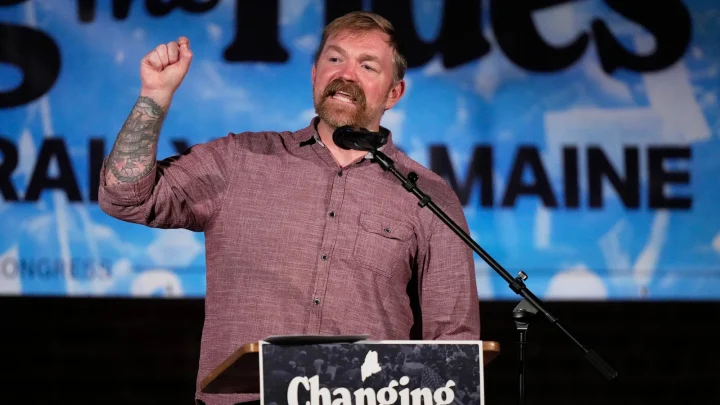
The broader implications of Villegas’ victory extend beyond California. This race is part of a larger pattern in which the Democratic base is increasingly rejecting candidates perceived as too aligned with the party’s establishment. In Maine, for instance, Graham Platner’s unexpected win in the Senate primary highlighted this trend. Platner, a combat veteran and oyster farmer, defeated Senator-elect Chuck Schumer’s preferred nominee, Governor Janet Mills, after she failed to secure strong support from voters. While Platner’s campaign was not without controversy—his past relationships and online posts have drawn scrutiny—the outcome underscores a shift toward grassroots-backed candidates.
Other Races Reflecting the Same Dynamics
Similar dynamics are playing out in other states. In Michigan, Rep. Haley Stevens faces a three-way Democratic Senate primary against state Sen. Mallory McMorrow and progressive favorite Abdul El-Sayed. The August 4 primary could determine the future of the state’s Senate race, with El-Sayed recently gaining a major endorsement from the United Auto Workers union, a powerful political force in the region. His campaign has focused on economic fairness and labor rights, themes that resonate with many in the Democratic base.
Meanwhile, in Minnesota, progressive Lt. Gov. Peggy Flanagan is locked in a fierce contest with U.S. Rep. Angie Craig, who enjoys support from labor unions, LGBTQ groups, and moderate Democrats. The August 11 primary is shaping up as a pivotal moment for the state’s Senate race, with both candidates vying to represent the interests of their respective constituencies. Flanagan’s progressive platform contrasts with Craig’s more centrist approach, raising questions about which strategy will appeal to voters.
Another critical test occurs in Colorado on June 30, where progressive candidate Manny Rutinel faces establishment-backed Shannon Bird in the Democratic primary. The race is designed to determine who will challenge Republican Rep. Gabe Evans, a top target for Democrats. Like Valadao, Evans has been a key figure in the Republican House, and his defeat would mark a significant gain for the opposition. The outcome of this contest will likely hinge on whether voters prioritize policy positions over party affiliation.
Strategic Shifts and Unconventional Campaigns
The Democratic Congressional Campaign Committee’s decision to publicly endorse Jasmeet Bains in California’s primary further illustrates the party’s strategic adjustments. Bains, a doctor and state Assembly member, was selected to run against Villegas, a move that surprised some on the left. While the committee did not openly criticize Villegas, their support for Bains sent a clear message to donors and activists that the party believes in his electability.
This intervention by the DCCC highlights the tension between the party’s institutional leaders and its grassroots supporters. Congressional leaders typically avoid overtly endorsing candidates in open seats, preferring to let the primary process determine the field. However, in this case, the committee felt compelled to step in, fearing that Villegas’ populist appeal might undermine their chances in the general election. The decision to back Bains has drawn criticism from progressive factions, who argue that it represents a retreat from the movement’s core principles.
Despite these challenges, the races in California and beyond continue to shape the Democratic Party’s strategy for the November elections. Each contest offers a glimpse into the evolving preferences of voters, who are increasingly drawn to candidates who promise change. As the primary season progresses, the focus will remain on whether these progressive voices can translate their appeal into electoral success. The results of these races will not only influence the House and Senate but also set the tone for the 2020 presidential election.
With so much at stake, the outcomes of these races will be closely watched by political analysts and campaign strategists. The ability of progressive candidates to challenge their more establishment-backed opponents could redefine the balance of power in Congress. In a season marked by uncertainty, these contests offer a rare opportunity to gauge the strength of the Democratic base and its willingness to embrace new leadership.
As the votes continue to roll in, the question remains: will the populist wave sustain itself, or will it be tempered by the realities of the electoral landscape? The answer may come in the coming weeks, as voters in these key districts decide who will represent their interests in the months ahead. This moment in California is just one of many that could reshape the nation’s political future.