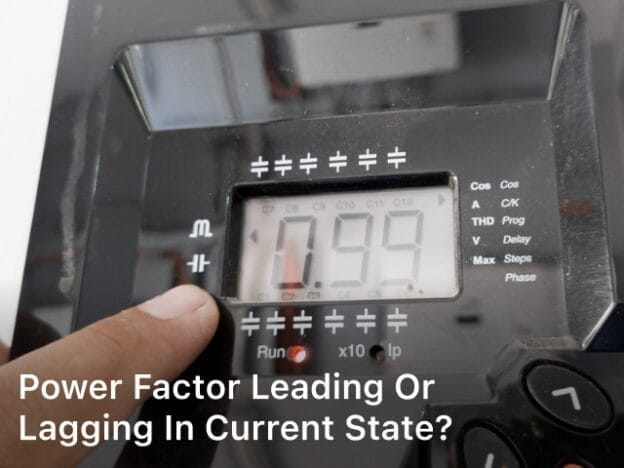
greentechinnovate.com. Power Factor leading or Lagging in Current State? – Uncover the essential differences between Power Factor leading or Lagging. Explore their impact on your power system’s performance with us. Power Factor Leading or Lagging As power systems become increasingly complex, power factor becomes an important factor to consider in maintaining a stable and efficient electrical system. Power factor refers to the ratio of real power to apparent power in an electrical system. It measures how effectively electrical power is being utilized by the system. A power factor of one indicates that all the power is being used effectively. But a power factor of less than one means that the system is not using all the power it is receiving, which can lead to inefficiencies and increased costs. There are two types of power factor: leading and lagging. These terms are used to describe the phase difference between the voltage and current in an AC circuit. A leading power factor means that the current leads the voltage, while a lagging power factor means that the current lags the voltage. Understanding the difference between a leading and a lagging power factor is essential in maintaining a healthy electrical system. In the following sections, we will discuss in detail what power factor is, the factors that influence it, the impact it has on power systems, and how we can correct it. Key Takeaways: Power factor is the ratio of real power to apparent power in an electrical system. A power factor of less than one indicates that the system is not using all the power it is receiving. There are two types of power factor: leading and lagging. What is Power Factor? Before we delve into the differences between leading and lagging power factors, let’s first define what power factor is and how it is calculated. Power factor is a measure of how efficiently electrical power is being used in a system. It is the ratio of real power (the power that is actually doing useful work) to apparent power (the total power supplied to the system). To calculate power factor, we use the formula: Power Factor = Real Power (W) Apparent Power (VA) The result of this calculation will be a decimal or a percentage. A power factor of 1 (or 100%) means that all the power supplied to the system is being used to do useful work. A power factor less than 1 (or less than 100%) means that some of the power is being wasted. So, how do we know if our power factor is leading or lagging? A leading power factor occurs when the load (i.e. the device using the power) is capacitive, meaning it stores electrical energy. A lagging power factor occurs when the load is inductive, meaning it uses electrical energy to produce a magnetic field. It’s important to note that power factor can be positive or negative, depending on the phase relationship between the voltage and current in the system. A positive power factor means that the current is in-phase with the voltage, while a negative power factor means that the current is out-of-phase with the voltage. Leading Power Factor When the current waveform leads the voltage waveform in a power system, it is said to have a leading power factor. A leading power factor can occur when the load is capacitive in nature, meaning it draws current that leads the voltage. A negative power factor is also considered a leading power factor. A negative power factor indicates that the load is consuming power instead of supplying it back to the system. This can occur when the load includes devices such as induction motors, which draw reactive power from the system. A leading power factor can have both positive and negative effects on the power system. On the positive side, it can improve voltage regulation and reduce losses in the transmission system. However, if left uncorrected, a leading power factor can result in overloading of transformers and generators, leading to decreased overall efficiency of the system. Effects of Leading Power Factor on Power System Impact Effect Voltage drop Decreased voltage level in the transmission and distribution system, leading to inefficiencies and reduced performance of equipment. Increased Line Losses The current drawn by the load is out of phase with the voltage, causing increased line losses. Reduced System Capacity Leading power factor can cause overloading of transformers and generators, reducing the overall capacity of the system. Lagging Power Factor When the power factor of a system is negative, it is said to have a lagging power factor. This means that the current lags behind the voltage, resulting in an inefficient use of power. A lagging power factor is common in systems where there are inductive loads, such as motors and transformers. In a lagging power factor system, the amount of power that the load actually consumes is less than the apparent power. This is because the reactive power that the inductive load produces is not used by the system and is wasted. The wasted power puts an unnecessary burden on the power system, resulting in higher energy bills and reduced efficiency. Lagging power factor can cause a number of problems in electrical systems, including voltage drops, overheating of equipment, and damage to motors and other electrical components. This makes it critical to manage and maintain a balanced power factor in order to avoid these issues and optimize system performance. To manage a lagging power factor, there are several solutions that can be implemented, including the use of capacitors and inductors. These corrective measures can help to improve the power factor and ensure that the energy being consumed is efficiently utilized. Factors Influencing Power Factor Power factor can be influenced by a variety of factors, including the type of load, the type of equipment, and the operating conditions of the power system. Understanding these factors is essential in managing power factor and optimizing the efficiency of electrical systems. Type of Load The type of load connected