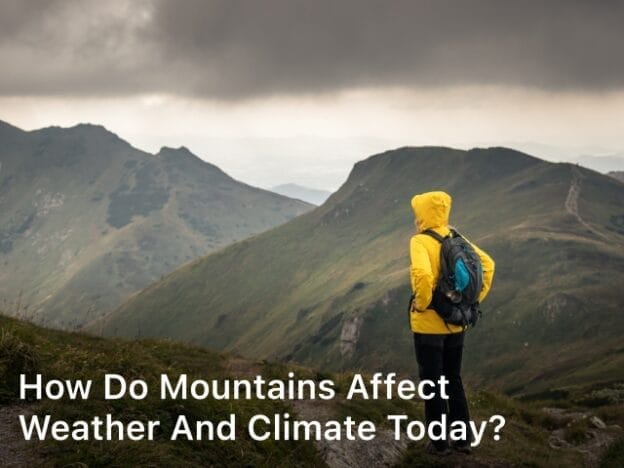
greentechinnovate.com. How do Mountains Affect Weather and Climate Today? – Discover the fascinating ways in which mountains affect weather and climate. Explore the intricate relationship between geological formations and atmospheric patterns, and understand why mountains play a crucial role in shaping our planet’s climate. The majestic allure of mountains has captivated humans for centuries. Beyond their breathtaking beauty, these towering landforms hold a secret influence over the very atmosphere that envelopes our planet. “How do mountains affect weather and climate?” is a question that leads us on a journey of discovery into the intricate dance between Earth’s terrain and its atmospheric phenomena. In this article, we delve deep into the science behind this captivating interaction, unraveling the mysteries of how mountains impact weather patterns and shape global climates. How do Mountains Affect Weather and Climate? The towering giants that we know as mountains are not merely silent witnesses to the passage of time; they are dynamic players in the intricate ballet of Earth’s weather and climate systems. With their grandeur and geological complexity, mountains wield an immense influence on the patterns of wind, rain, and temperature that shape our planet’s diverse climates. Delving into the question of “How do mountains affect weather and climate?” reveals a captivating narrative of nature’s sculptors and their profound impact on the atmospheric symphony. Orographic Lifting One of the most significant ways mountains influence weather and climate is through a phenomenon known as orographic lifting. When moist air approaches a mountain range, it is forced to ascend as it encounters the towering obstacle. As the air rises, it cools and condenses, leading to the formation of clouds and precipitation. This process is responsible for the lush rainforests on the windward side of mountains, where ample moisture-laden air meets the slopes and releases its life-sustaining payload of water. Rain Shadows and Arid Conditions However, the story doesn’t end on the windward side. As the air continues its ascent and releases moisture, it reaches the summit and descends on the leeward side of the mountain range. This descending air becomes warmer and drier, creating a rain shadow effect. Regions situated in the rain shadow experience reduced rainfall and arid conditions, creating deserts or semi-arid landscapes. The stark contrast between the lushness of the windward side and the aridity of the leeward side highlights the powerful impact of mountains on precipitation patterns. Temperature Gradients and Wind Patterns Mountains are also instrumental in creating temperature gradients that influence wind patterns and atmospheric circulation. As air rises over a mountain, it cools and becomes denser, leading to the development of high-pressure systems. Conversely, the warmer, less dense air at lower elevations generates low-pressure systems. This contrast in pressure drives winds, causing air to move from areas of high pressure to areas of low pressure. These wind patterns can lead to the development of localized weather phenomena, such as valley breezes and mountain waves. Global Atmospheric Circulation The influence of mountains transcends local weather patterns; they play a pivotal role in shaping global atmospheric circulation. Mountain ranges disrupt the dominant patterns of atmospheric movement, including the jet streams that guide weather systems across the planet. The interaction between the irregular terrain of mountains and the prevailing winds creates turbulence and eddies that alter the course of atmospheric currents. This disruption has a cascading effect, leading to changes in weather systems and climate zones around the world. Ocean-Atmosphere Interaction Mountains, particularly those situated near coastlines, also impact the intricate dance between oceans and the atmosphere. Coastal mountain ranges can influence the formation of sea breezes, where cooler air from the ocean flows inland to replace the rising warm air over the land. This interaction affects coastal climates, moderating temperatures and influencing weather patterns along the shoreline. Additionally, mountains near coastlines can influence ocean currents, leading to variations in oceanic heat distribution that, in turn, impact regional climates. Elevation and Climate Zones Perhaps one of the most visually striking manifestations of mountains’ influence on climate is the concept of elevation and climate zones. As you ascend a mountain, you traverse a range of climates akin to a journey from the equator to the poles. The base of the mountain might host tropical vegetation, while the higher elevations are characterized by temperate forests, and the peaks are crowned with snow and ice. This vertical progression of climates highlights the intricate relationship between elevation, temperature, and precipitation, all of which are shaped by the presence of mountains. In the grand symphony of Earth’s natural systems, mountains emerge as powerful conductors, directing the flow of air, moisture, and temperature across the globe. The question of “How do mountains affect weather and climate?” leads us into a world where geological formations intertwine with atmospheric phenomena, creating a dynamic and interdependent relationship that shapes the very essence of our planet. As we marvel at the majesty of mountains, we also acknowledge their role as atmospheric sculptors, orchestrating the symphony of climate that influences life in every corner of Earth. How do mountains impact the weather? Mountains play a pivotal role in shaping local weather conditions and broader atmospheric patterns. Here’s how they influence the weather: Orographic Lifting: As moist air is forced to rise over mountain ranges, it cools and condenses, leading to the formation of clouds and precipitation on the windward side. This phenomenon, known as orographic lifting, can create rain shadows on the leeward side, resulting in arid conditions. Temperature Gradients: Mountains can create significant temperature differences between different elevations. This variation affects air density, leading to the development of pressure systems that drive winds and weather patterns. Wind Patterns: The interaction between mountainous terrain and prevailing winds can lead to the formation of localized wind patterns. These can range from valley breezes to powerful mountain waves that impact aviation and weather downwind. Why do mountains have such a big effect on climate? The influence of mountains on climate extends far beyond local weather patterns. Here’s why their effect on climate is profound: Global Atmospheric